DOGE is a disaster

As we’re now a month into the Trump administration, we’re seeing the fruition of Project 2025 dreams. Elon Musk is taking both a figurative and literal chainsaw to the federal government.
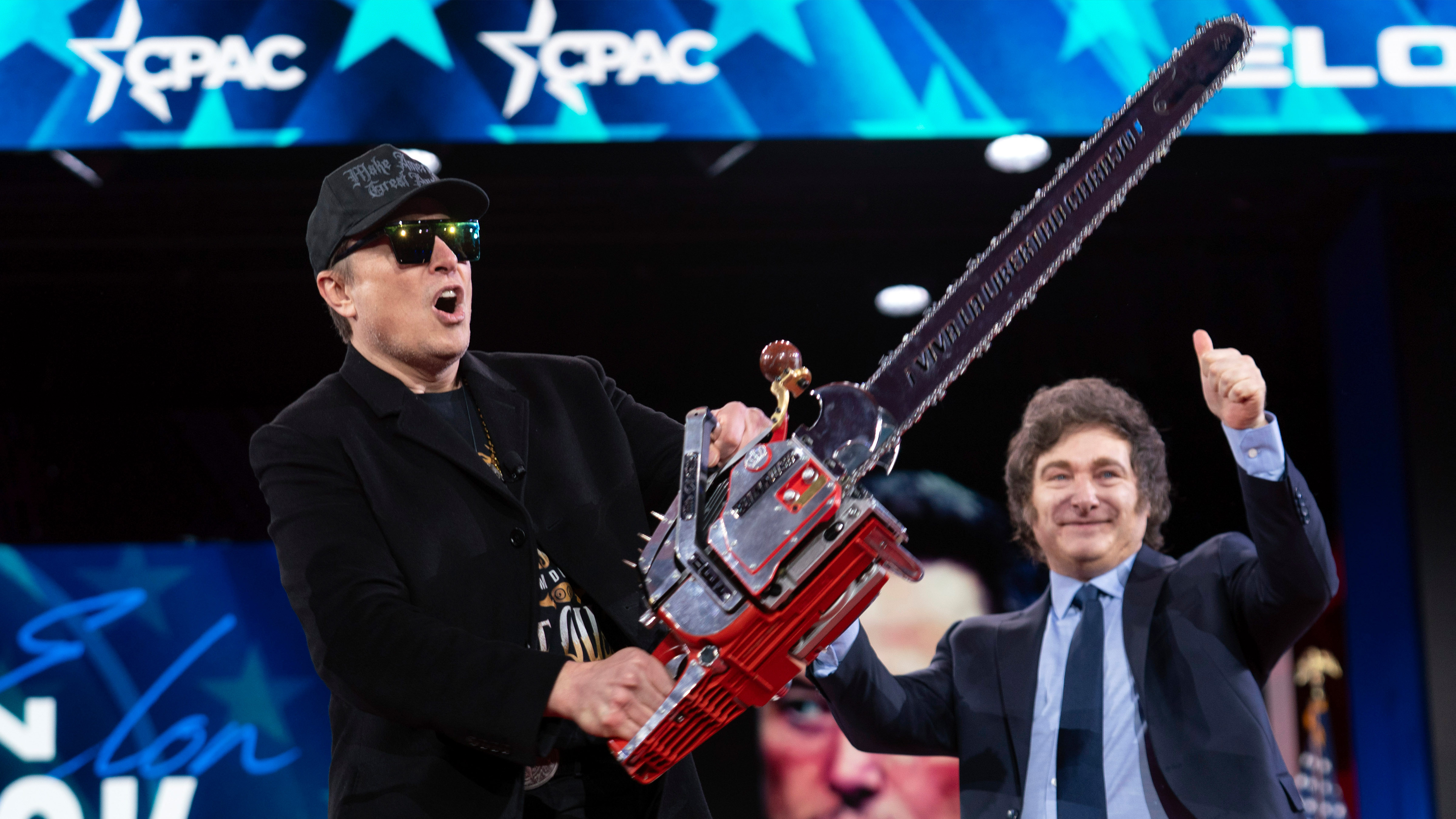
This half trillionaire man-child has come into the government and acted as if Trump and Musk have a mandate to make dramatic changes to the US Government. That, instead of winning with a small majority, they assume they won by a landslide. They didn’t. Most Americans do not want what Elon is selling to us.

The Fork in the Road email was likely illegal, for a number of reason. As outlined by Legal Eagle in the video below.

https://www.youtube.com/embed/PT848djz4jA?si=fjj-uv3pU-vxjBRK

The firings are likely to cause mini recessions across the US as large number of people are suddenly unemployed. All in the name of reducing the size of the federal government. However, the job cuts have been done in such a sloppy way that many agencies are trying to rehire people they’ve fired.

This will make us less safe. We are firing flight controllers, which will negatively impact small and regional airports the most, but will lead to issues at our main hubs too. The goal, of course is privatization. That’s been a clear goal of republicans for decades. Privatizing an organization like the FAA is not a good idea. A consistent overarching regulatory regime is good for our airlines. It’s also unclear how Musk/Trump would privatize the FAA. Would they fracture it by state, would they just make it a single company.

How would states respond? Would some of them decide they need to have some sort of statewide institution to address the gap left by the FAA? Would we see significant deviations between the west coast and the south?

Piecemeal regulation like this causes issues with car manufacturers. As they are basically being driven by the most stringent regulations, mostly California. Would Boeing and Airbus find themselves under a similar sort of policy regime? Would Trump then try to kill the state’s ability to do this? Which they’ve tried to roll back California’s regulatory regime around emissions.

Many of these changes are illegal too. As Legal Eagle explains above. We need to take the legality of these issues seriously. We are a country of rule of law, even if the history of that application has been rather uneven.

We are the most powerful nation in the world and we have always had countries looking to the US to emulate our behavior. DOGE is certainly going to be emulated in other countries with dictators. We will see then, that the US media will broadly report how despotic those leaders are. We need to apply that mirror to ourselves.

DOGE is part of a dictatorship. Trump is in the middle of a bureaucratic coup. We need to fight it however we can. Call your Senators, Representatives, both Federal and State. Donate to organizations dedicated to fighting this. If you can, protest.

You aren’t impotent right now. You can fight back.

Book Review: The Myth of American Idealism

I just wrapped up the Myth of American Idealism: How US Foreign Policy Endangers the World, by Noam Chomsky and Nathan Robinson. It’s been a while since I read a book by Chomsky. I heard about this one through an interview with Sam Seder of the Majority Report and Nathan Robinson a few days ago (mid Feb 2025). This book is apparently hot off the presses. Despite that they weren’t able to adequately discuss the Israeli invasion of Gaza, only the history leading up to it. It seems they finished that section just days before the October 7th attack.

As always Chomsky offers an interesting counter view to the mainstream press and often the view American historians. I think these views are important, as they can provide clear eyed discussions on what the US is doing at home and abroad. I think as Americans we need that. We need someone to pick us up and put us in the position of the outsider. We need to look at what our country does with the same critical lens our Press analyzes our national enemies.

Much of this book was relatively new to me. Or rather, I was aware of the events happening or that they had happened, but not to the extend described. Chomsky and Robinson constrain their review of US history to, mostly, the past 50 years, so shortly after Vietnam. However, to understand the US post Vietnam, you need to understand the Vietnam war and to understand that you need to go back at least to World War II.

As I said in my short the other day, History didn’t start on October 7th. Decisions made by one President influence and constrain the available options for the next President. Regardless of party, there is more often a likelihood of the next President will continue existing US policies. There are a variety of reasons for this, which is outlined in the book, including that even if the specific action was illegal, it’s already been done, so it’s unlikely to lead to repercussions. If the action is stopped, it may lead to a constraint on Presidential power and that would be unacceptable for the US President.

One thing that I had always wondered, since I was a teenager, is why the US sphere of direct influence, the countries in the western hemisphere are in such horrible states. This book answers it. It is US policy for these countries to be in the states they are. We have overthrown or supported the overthrow of a majority of South American countries. We have supported militaries and far right groups that support US business interests. We do not support New Deal based politics in the global south. Because that may mean providing more for the people of that country and less to the United States.

Chomsky and Robinson highlight cases in Nicaragua, Chile, Guatemala, Brazil, Ecuador, Panama, El Salvador, Honduras, and more. They describe in specific details what intervention we did. What sort of regime we supported, which includes Pinochet, which made me nauseous to read. Hell, we supported the Khmer Rouge until it wasn’t politically convenient any longer. The Khmer Rouge. Just despicable.

We, Americans, mostly White Americans, need to look at these choices head on. We need to understand what our country is doing in our name. We need to say, “No. I do not want to bomb those countries. No I do not support demanding 50% of mineral rights from Ukraine.”

Many US leaders do not want us to feel shame in our history. They do not want us to feel shame, because that shame will lead to anger and anger will lead to action. I do not feel shame over what the US has done. I feel angry. I never supported these actions. I never wanted the state to do these things. I protested against them. We should be angry. The US is a destabilizing force in the world. We need to reckon with that and make a decision on what we should do about that. We should be angry. Be Angry. Do something.

Note: Some links will be affiliate likes to Bookshop.org

The Insurrection…

It isn’t over yet. The insurrection will not be over until we’ve address the source of the wound and eliminated it. This was a violent planned assault against our democracy. One that attempted to destroyed the results of 50 legally certified elections. They planned to hang Mike Pence they were hunting Nancy Pelosi and we were lucky this didn’t turn into a mass casualty event.

So, let’s take a step back. How is this different than the Black Lives Matter protests. Those had violence too. There was a police precinct burned down. In Portland, they were assaulting the Federal Building! These are all true. However, the goal of the protest was mostly to work within the system to change the system. If you look at Portland, the courts deemed that the city was being overly violent and starting much of the violence rather than the protesters. They were ruled to avoid using tear gas, then it was turned into law. The protest were actually dying down until Trump inflamed them by sending in unmarked vehicles into the city.

Sure, you might be saying, but that doesn’t excuse the violence. You’re right, Straw person. Violence isn’t excusable and the city of Portland is experiencing some serious tension between the people of the city, the businesses in downtown, and the city officials. One thing we need to look at, is that many of these larger businesses are part of the larger system that drives the prison pipeline.

In Minneapolis, the Target that was burned down, was trialing a specific AI based tool to determine if someone was shop lifting. It was often wrong. So Target itself was a source of an increase in false arrests and increase of interaction with police.

Furthermore, the BLM protest was a protest against state violence against a specific set of people. Which didn’t stop during the Pandemic. The data indicates there is a racial bias against people of color, specifically black men, in police stops. See the YouTube video below.

So, in the case of BLM protests, it is the protest of the oppressed against the oppressors. The state has a bias against a group of people and those people are trying to make it clear to everyone involved they are being oppressed. The violence against them is an effort to keep that power over them. That’s why the state rejects these efforts so violently.

What we saw at the Capitol is something different. It is the dominant group, losing their position of dominance or at least perceiving the loss of Donald Trump as the loss of that dominance. The system was working as intended. Republicans, in general, turned out in massive numbers. The Democrats, just came out in larger numbers in many areas. Trump lost by a landslide, but has been lying about his loss. He’s made a decision that he wants to stay in power and a group of white supremacists have decided they want to keep him in power.

Furthermore, many elected leaders, like Josh Hawley and Ted Cruz (among 120+ members of the house) have decided to keep Trump in office or use this as a chance to win election in 2024. These leaders primed the mob to actually do something about the election results. If you have any doubt about that, please read this twitter thread, digging into the propaganda of Trump’s speach.

So, now that we know this was a planned event to illegally overturn the election results through an insurrection, what do we do next? We need to learn from our failure during the Civil War reconstruction (see my blog on White Rage) where we, as a country, completely failed to prevent a long slow cold Civil War. The other places we should look are at other countries that had mixed success dealing with their coups, like Japan.

Given that we’ve already had reports of additional events, supposedly today (1/10/21) in NYC, events on 1/19/21, and likely 1/20/21 to disrupt the inauguration, this insurrection isn’t over until it’s either successful or we put it down for good. That may require structural change to how we think about the United States including meeting some of the demands of BLM protesters.

Book Review: Race After Technology: Abolitionist Tools for the New Jim Code by Ruha Benjamin

Race After Technology: Abolitionist Tools for the New Jim Code by Ruha Benjamin

My rating: 5 of 5 stars


This book builds on the research in Algorithms of Oppression: How Search Engines Reinforce Racism and Dark Matters: On the Surveillance of Blackness, so I definitely recommend reading those two books first. I’m not alone in that, in one of the talks I’ve watched Benjamin give, she explicitly mentions those books as influencing her. I really enjoyed this book, it brought together ideas from my own master’s degree, including the complexity of how technology is used. In one class we specifically discussed the Moses’s bridges in New York (despite this being taught in the Netherlands), which were designed to exclude the poor by preventing buses from crossing the bridge. In this book she discusses this bridge and how it can pull in the very people that were expected to benefit the bridge design (basically a bus full of rich white kids went across after they came back from a trip to Europe, the driver hit the top of the bridge which resulted in 6 people getting seriously injured).

She modernizes these examples by describing how algorithms are created to approximate details about people, such as determining their ethnicity to provide “targeted services.” Due to historical redlining, the practice of creating white people only enclaves in suburbs and portions of the city (a Jim Crow era set of laws), the zip code has become a reliable indicator of ethnicity and race. She gives the example of Diversity, Inc., which creates ethnicity or racial classifications for potentially hiring companies. They will look at the names of people and assess their ethnicity, however due to the history of slavery, many African Americans have white sounding surnames, like Sarah Johnson, to “correctly” identify the ethnicity of Sarah, the company uses her zipcode to assign her race.

Overall, I found a lot of examples in this book very illuminating. Benjamin finds the approach to Design favored in Silicon Valley wanting and excluding, primarily focused on empathizing for making money, which in many cases is empathizing with whiteness. Furthermore, Benjamin argues that empathy can lead skewed results, such as body camera video providing empathy for police officers even when they are killing Black people for crimes which aren’t capital offenses or no crime at all.

As an engineer, I took this book as a warning. That we need to understand how data is impacting those around us. That we need to understand how data that might seem harmless to me, could cause serious harm to someone else. That algorithms that seem to be doing good, could instead be quickly turned into something bad. Facial recognition is a great example. Facebook tags people in photos without consent and this can be exploited by law enforcement. Furthermore, since facial recognition software is so inaccurate, it can misclassify a person as the wrong sex, the wrong person, or in extremely bad past cases, as an animal.

Furthermore, engineers have the responsibility to ensure our work is used to create more equity in the world. Benjamin offers a few different organizations that are working to ensure justice and equity for everyone. Maybe it’s time that software engineers/developers have a responsibility for this the same way a civil engineer must ensure a bridge is safe.

I recommend that anyone that works at a social media company read this. Anyone doing work for algorithms in banks, insurance, hiring, and housing really understand the fact that algorithms aren’t objective. They are as objective as our history. Our history hasn’t been objective nor equitable. We must change that.


View all my reviews

Banning TikTok Will Blow Up in US Politicians’ Faces

Leaving aside the various reasons why Trump would want to ban TikTok, which are almost entirely self serving, we need to take a step back and look at how banning an app from China could negatively impact US companies and if that’s a good thing or a bad thing.

First, TikTok is a short video app that allows people to make both simple and sophisticated videos. Some are edited to present an entire scene others are just short videos of live action. They can be used for political commentary or just for humor. This isn’t the first App like this, Vine was the original TikTok and was widely popular, but Twitter was unable to monetize it, so they shut it down. Instagram has Instagram Live, Facebook has an app like this too.

However, the big difference between those apps and TikTok is that TikTok may have influenced the Tulsa rally and made Tump look back. The OTHER difference is that it’s owned by a Chinese company. There some fears that this means it will be used by China to collect information on American citizens and shared with the Chinese Government to do something back to our citizens. There’s “fear” that TikTok will influence the election in some fashion and will be, ultimately, influenced by the Chinese government.

To be clear, just about every social media company has to share information with their government. There’s currently an ongoing law suit in the EU about US social media companies and if they properly shield EU data. With that ruling, there are serious question if social media companies can send any data back to the US, since the US government routinely gets access to the data. That the US Government is a huge problem when it comes to social media companies.

Given that the US is looking to ban TikTok for something very much like what the EU just ruled that the US is doing, should give lawmakers pause before banning any other country’s social media platforms. If the US does something like this unilaterally, without going through any third party organization, like the WTO, then other countries may take that the opportunity to do the same for any company from a country they don’t like. If it’s good enough for the US, it’s good enough for us!

Furthermore, this flies in the face of the Neo-liberal economic framework the conservative movement in the US purports to support. Rather than government regulation, they should be pushing for Facebook, Twitter, and other platforms, to compete against TikTok and defeat it in the market place. Given that they are instead resorting to regulations, indicates the fact that they are being opportunist here and simply doing this for political reasons. As it is something of a political platform for young people.

Additionally, since there are at least two known cases of Facebook actually influencing elections through external meddling, the US 2016 election and Brexit vote, it is likely that Facebook represents more of a threat to any given government than TikTok. Though, all platforms can be turned into a disinformation platform if enough actors decide it should be turned into a disinformation platform.

It should be viewed as likely that other governments would move to ban US based social media companies and services, like Google and Amazon because of their closeness with the US government. Amazon provides an AWS platform for the CIA and other three letter organizations.

Of course, this might all be moot, because it’s not obvious that the US government can even ban TikTok, as it IS such a huge platform for free speech. Regardless, keep an eye out for other countries taking a lead from the US government after TikTok is banned. It is likely that dictatorships will leap at this chance.

We should not ban TikTok. We should create laws and a framework that requires businesses to strongly protect user data on any social media platform regardless of if it is US based or foreign. We should expect to see more innovation from othe countries over the next few years and that Facebook, Amazon, Google, Twitter, and Microsoft will all experience strong competition.