Babel as a Luddite Fantasy Book

I read Babel by R.F. Kuang about two months ago. It’s an interesting book, one which I’d argue is a Luddite book at it’s core. Now the author explicitly calls it a Revolutionary book, in the subtitle, but as I wrote in my post about AI and Ludditism the Luddites were revolutionary and they were in a civil war.

Just so you know, there are spoilers in this discussion. Somewhat obviously.

The book is something of an alternative of our own Earth, based at Oxford University. Which, R.F. Kuang did study at. So she actually does have significant experience at the university and in the surrounding city. In her first series, The Poppy Wars, she has shown her excellent historical research skills. She dug into the Rape of Nanking or Nanjing Massacre as it is called today.

In this version of Oxford there is a specific type of magic, which is an offshoot of the language arts. The source of magic is the tension and distance between the definition of a word in one language and the “same” word in another language. An example would be the difference between Gezelig or Hegge, Dutch/Danish, and Cozy in English. Cozy is the closest word we have in English to these similar words in other language. These other words includes the love of family in a comfortable warm environment often during winter.

The distance between the two words drives some sort of associated magical power. Perhaps it would create a warm comfortable space where people were happy and more likely to fall in love. In other cases, such as the difference in English run and Chinese characters representing a running human, could power a train.

There’s another material required to enable this, a specific type of Silver. This Silver was mined all over the world, but like historical artifacts, much of it found itself in Britain. Similarly to how raw materials have moved from the edge of empire to the core of empire. Both during the height of the British empire and during our own time of the US domination.

The creation of the magic is created by the translation group in Oxford students and researchers in “Babel” which of course is based off the Biblical name. The students were nearly all international students with significant competence in English and one or more languages. Generally the more distant the language is from English, the more significant the power of the magic.

The blocks of silver basically replace steam power in this world. There are power plants, cars powered by the silver, and machines powered by silver. This is the industrial revolution in this world. Instead of steam, it’s silver. Either way, it requires significant extraction from physical locations around the world to power the technology.

The silver and the power of the words gradually reduces, which continually requires more silver and the domination of new languages. Peoples and Languages are related. To exploit the language means you are exploiting the people. Those languages are made subservient to English.

Where this becomes a Luddite and revolutionary work, is that the foreigners that perform the work, revolt. They decide to share the power of the silver. First skimming material and stealing large amounts of silver to support liberation efforts elsewhere in the world.

The academics form a coalition with the workers that are being pushed to the edge because of silver power. This is the same struggle Luddites found themselves in. They fought against the use of steam power that dehumanize the people using the tools. Silver does the same. Silver enables child labor. Silver, like steam, crops up empire.

In fact, the response of the crown is strikingly similar to what Merchant describes in the Blood in the Machine. The crown decided to respond with force, sending significant number of troops. Using military might to force the academics back to work.

The workers they actually teach the academics how to protect themselves. They create barricades. They bring weapons. They drive strategy for fighting the military. This is truly a revolution.

However, like the Luddite revolution, the academic revolution in this book fails. The Crown does win.

I truly think this book does a great job explaining alignment between white collar workers and blue collar workers. It’s obvious that today, which has a lot of analogues to the 1870s in the UK, that engineers, developers, tech workers generally, should create coalition with union organizers for service workers and blue collar workers. We have more similarly with each other than we do with the owners of capital.

I think this is even more true with the backlash we’re seeing today in tech leadership. Zuckerberg just rolled back a lot of benefits/support for LGBTQ employees and users of his products. He’s claimed that companies have been neutered and need more masculine energy.

I think this ant-employee behavior. It is anti-user behavior. Claiming that a company needs more aggression is not a healthy way to manage a team. Yes, you want competition between companies themselves, but you do not want competition between employees. It breeds distrust and anxiety in the company.

The problem is that based on donations to Trump and general alignment between people like Musk, Bezo, and Zuckerberg the technology leaders aren’t interested in competing with each other. Instead they are dividing up the digital space and punch down by attacking their employees.

Babel, Blood in the Machine, and similar books highlight the solidarity we need with fellow workers. Tech white collar workers need to drop the solidarity with tech leadership. They do not care about engineers. They will drop you as soon as they can. They play on your emotions to stay working for them, because you’ll be hurting your coworkers.

Anything that negatively impacts your coworker long term is their choice. Leadership dictating the number of promotions and how to promote is a choice. Their hands are only tied by their own greed. If you have to wait another year for a promotion, fire your boss. You earned that promotion. With the sheer volume of layoffs, it should be clear to all tech workers that you only matter as long as they can exploit you for their gain.

You can figure out how to exploit your employers.

Book Review: Why So Many Incompetent Men Become Leaders

Why Do So Many Incompetent Men Become Leaders?: (And How to Fix It)Why Do So Many Incompetent Men Become Leaders?: by Tomas Chamorro-Premuzic
My rating: 5 of 5 stars

This book does a fantastic job outlining all the ways men fail as leaders. Let me back up. This book isn’t a man hating book. Its goal is to ensure better leadership at any company. The way to do this, isn’t to just promote women, any woman. The way to do this, is to scrutinize everyone the way that women are scrutinized. Because, the data, and this book brings receipts, shows that women are better leaders.

So why are women better leaders? Well, in general women are less narcissistic in fact men are 30% more likely to be a narcissist than women. Second, men are more likely to be psychopaths, about 50% more likely, in fact. Furthermore, while in the general population about 1% of people are psychopaths, 1 in 5! Senior leaders are psychopaths and 1 in 3! Are narcissists.

Most of this book goes on to outline the failings of male leadership, because of the ways that narcissists are horrible leaders. Similarly for psychopaths. The more interesting part, though, is where the author talks about the benefits of women leadership and how that is associated with higher EQ (emotional intelligence). Both narcissists and psychopaths have very low EQ which results in poorer performance. What the author argues for, are leaders with high IQ and EQ. Women are more likely to have higher EQ than men (by about 20%). There are no significant differences between the genders for IQ, which means on the whole women are better for leadership roles because of their higher EQ.

There are a lot of reasons why we don’t pick for high EQ and one of those reasons is “confidence” really perceived confidence. Another is charisma, where male charisma is desirable and often female charisma is ignored or misunderstood.

The book, sadly, doesn’t offer as much in the way of how to fix it as it claims in the title. There are a few sections. First ask questions that can identify if someone is a narcissist. Ask questions to figure out if someone is a psychopath. Then don’t hire them. The other major innovation the book offers is using structured scored interview questions. This will create a mechanism to compare apples to apples rather than wildly different interview questions.

So, I’m disappointed on the “how to fix it” portion. Hopefully the author will include a section at the end with specific links to questions. I know there are reference and end notes, but putting together a rubric that can more easily be applied would be a great way to improve this and allow people to really see what Manpower uses to fix this problem.

View all my reviews

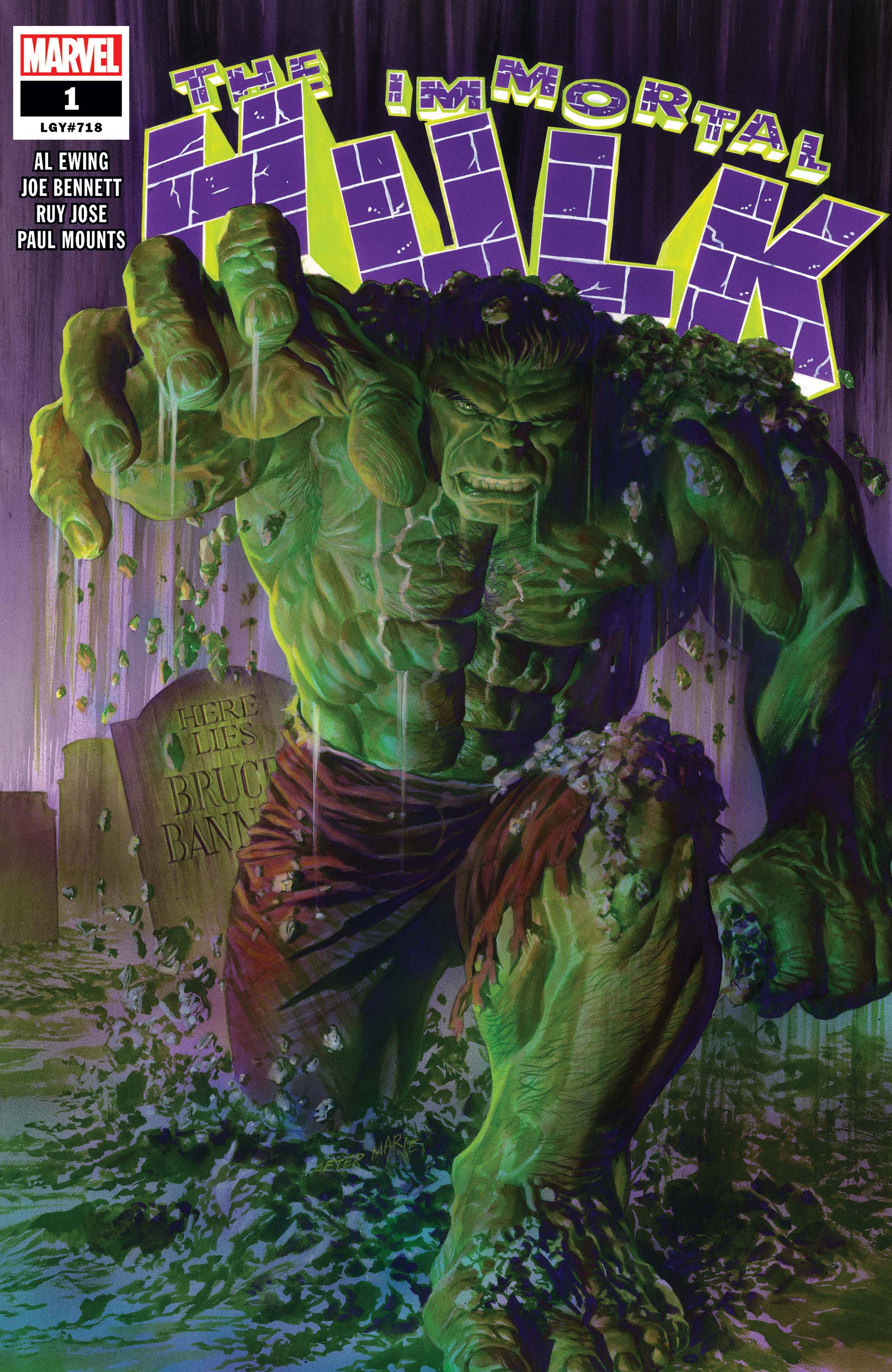
Book Review: Immortal Hulk Issues 1-25

Link to Book  Image result for immortal hulk5/5 Stars

Alright, this isn’t my normal book review, but these comics moved me in a way that not much media. From what I understand the Author, Al Ewing, originally planned the Immortal Hulk only to be 25 issues, it’s now gone beyond that by a handful and looks like it will continue to move forward. However, I think this initial arc will likely be the most impactful of the Immortal Hulk stories. Or at least of telling a story about the costs of abuse on individuals, their relationships, and society as a whole.

So, most of you are used to seeing Hulk and Incredible together. Well, that character was killed. Bruce essentially committed suicide by way of Hawkeye. After some Avengers tomfoolerly Hulk was brought back to life by the Grand Master during a chess match. This resulted in the Hulk becoming the Immortal Hulk.

*Spoilers ahead!*

Hulk is still on the run, as is normal in his comic books, but there’s a decided different tone about the chase and the fight. Mostly, because Hulk isn’t just chased by the military, but he’s chased by the ghosts of his past, literally, his father (who Bruce Banner killed) attacks him. There are also multiple Hulks in this. The ones I’m going to discuss are Devil Hulk (very intelligent, but well, evil), Savage/Child Hulk (The Hulk in the MCU, dumb and innocent), and Bruce Banner. There are a few others, but I’m not going to bring them up here.

I’m going to present a few key scenes that I think really convey a theme and discuss the themes below. The first scene that resonated with me is a scene where Bruce’s father comes home to find Bruce playing with a toy that’s significantly more advanced than what he should be playing with. This enrages his father, who lashes out at the boy. He throws a full glass of booze at Bruce. He slaps the boy, then demands Bruce’s Mother go with him leaving the boy. He then becomes the Breaker-Apart. The first signs of his rage.

The second scene that hit me is when Hulk goes to hell (it makes a lot of sense in the story, believe me). However, when he’s in Hell, he looks sickly and is wasting away, so he doesn’t look like the hugely strong being we’re used to seeing. While down in Hell, he and his reporter sidekick (McGee), begin to meet people they’ve lost. One of the people Devil Hulk comes across is Thunderbolt Ross, Bruce’s Father-In-Law. Devil Hulk flies into a rage while being the deadman and turns into Savage Hulk. Afterwards, McGee stops the Child Hulk and Hulk responds by saying “Why does Hulk hurt, why is Hulk always hurting.” Tears are streaming down his face. Rather than hugging or supporting the child Hulk, McGee demands to speak with Devil Hulk. Devil Hulk responds that Ross could have been a father to Bruce.

After going through Hell, Hulk finally finds Bruce. He’d been held captive by his father in Hell. Bruce wants to give up and stay in Hell, never going back to earth. Just ending it. The Devil Hulk offers a hand, Bruce asks why, Devil Hulk says “Cause I love you kid.” Bruce looks at him with tears in his eyes. Hulk continues, “Someone had to.”

The next scene is one where Bruce meets his ex-wife Betty Ross. She’s angry that he didn’t immediately reach out once he came back to life (it’s been about 8 months at this point). At first she’s really welcoming, but during their conversation she decides to end it. However at this time she’s murdered by someone chasing the Hulk. This of course enrages Bruce and he chases after the bad guy. An issue later we find Devil Hulk fighting the abomination, who eventually blinds Hulk and cuts off each limb – at this point Hulk is Child Hulk. We suddenly see Betty as the Red Harpy, her own Hulk manifestation. Child Hulk begs for help and love, instead Betty decides to literally rip Hulk’s heart out and eat it.

Eventually this all ends in the final chapter, where the Hulk becomes the last being in the Universe and is given immense powers as a guardian in the next. However, being Hulk, he consumes and disrupts everything. We see near the end that the Hulk is massive and is clothes lining planets, destroying them. The Great Breaker-Apart he is called. A being sees into the Hulk, inside there’s an infinite number of Bruce’s screaming in pain. There’s a great Hulk crying that out in torment. In the end, the Hulk is all that is left. Alone.

To me, this is a story about abuse. Emotional. Physical. Bruce was diagnosed with Dissociative Personality Disorder, which is clearly a result of the trauma he experienced as a child. The gamma bomb turned that trauma into a literal monster, the Hulk. The series indicates that without strong support of people around us to counter that trauma (specifically the McGee scene in Hell), that Trauma will turn us into monsters. That we then turn everyone around us into Monsters. That there’s parts of us, however monstrous, that need love and support to get through it. If we don’t get it, in those opportunities, someone else will provide it that might be malignant. Bruce created the Devil Hulk as his ultimate dissociation, where even the Hulk would turn to in his deepest pain. Bruce turned to that Monster, who wants to tear down society, because of Bruce’s pain.

There are things about the Devil Hulk’s plan to destroy society that make it the right target for his scorn. Society as a whole drove Bruce’s father to act the way he did in some regards. We often reject people in pain, in many cases they disgust us – in some cases because they remind us of our own weaknesses. Furthermore, the world itself inserts its demands on us, which in many ways are more important than our needs. Hulk NEEDS love while he’s in Hell. McGee isn’t able to give it because she’s afraid, but also because she’s in literal Hell and Devil Hulk is the only one to fix it. So Hulk dissociates so he can deal with the world. Trauma isn’t dealt with. Devil Hulk becomes dominant.

This is a really sad comic. It’s amazingly written. The art is fantastic. I strongly recommend checking it out.

Review: The Traitor Baru Cormorant (The Masquerade, #1) by Seth Dickinson

The Traitor Baru Cormorant (The Masquerade, #1)The Traitor Baru Cormorant by Seth Dickinson
My rating: 5 of 5 stars

This book was a really interesting case study in leading the reader astray. The author does a phenomenal job of misdirection ensuring the audience bought into the main storyline in the second half of the book. After the twist happen, I certainly thought back on the book and realized I missed a number of clues leading up to the twist.

That aside, I loved this book. If there’s a book that you want to use to educate someone on the negative impacts of colonization, I think this is an excellent start. On the one hand it’ll challenge those people because of the complexity of the cultures that are being conquered and on the other hand because it talks openly of the tools colonizers use to dominate other cultures. In most fantasy series the only tool of colonization is military might. There’s some nuance in Malazan Book of the fallen in some cases, mostly Lether, but generally it’s military might.

In this book, that’s turned on it’s head and the characters openly discuss the best colonization tools for the culture they are working to conquer. As an American who has recently been to Hawai’i, where I learned a great deal about the history and conquest of those islands, it was painfully obvious these books are based on conquest like the US conquest and colonization of Hawai’i.

I recommend this book for anyone that wants a unique way to talk about colonization with a fantastic set of characters. Including POC, LGBTQ, and nontraditional relationships.

View all my reviews

Review of The Left Hand of Darkness by Ursula K. Le Guin

The Left Hand of Darkness (Hainish Cycle #6)The Left Hand of Darkness by Ursula K. Le Guin
My rating: 5 of 5 stars

I was completely unaware that this was the 6th book of a series. I don’t think that really hurt my understanding of the expertly crafted world. This book explores, race, the sexes, sexuality, and the meaning of being human. Int his universe there are a number of worlds where humans live, at least 84, there could be more, but we only know of 83, plus the planet of Winter, where the story takes place.

The world is interesting for two main reasons. First, it takes place on a planet that has been in an iceage for millennia. Second, humans don’t have the two obvious genders, male and female. The humans on this planet are able to, and do, switch between the two during their “kemmering” whichis the ONLY time there are any sexes on the planet. In fact, the rest of the time they are essentially eunuchs. Technically having both male and female sex organs at this point. The book is interesting, because it’s a study of what life could be like without the duality of male/female. These discussions are important in this day and age, given importance of Trans rights in the political discourse and the general transphobia in parts of the polity (I literally looked at my twitter feed and the ACLU had just posted an article about a trans girl in Texas).

The book is, generally, written from the perspective of an Earth human, a young black man named Genly Ai. Which allows us to feel very connected to this book. The character struggles with handling the lack of duality and continually assigns maleness or femaleness to characters. He often gets them very wrong, especially in the case of his “Landlady.” Who looks more feminine to Genly Ai than many of the other humans on this planet. However, whenever he asked, he learned that the Landlady had never had any children of the flesh but had many children overall (essentially meaning the Landlady had never gotten pregnant but had gotten a number of other people pregnant).

Aside from the obvious relevance of the topic related to Trans rights, the book looks at how politics can change when a leader changes. How a peaceful country that has never known war, can create an otherness out of their neighbor and begin down the path of war. You can see through the action of people the impact of rhetoric of their leaders. This was written at the beginning of the Nixon administration and the end of the Johnson administration. But I think it still rings true given the Trump administration today. Our sense of otherness has moved from outside of our boarders to within our boarders in a terrifying way.

I really enjoyed this book. It was very thought provoking and definitely something worth checking out.

View all my reviews